

A Beginner’s Real Guide to ACCA Courses in Nairobi
You’ve finished KCSE with a C+, you’ve got the C in maths and English that most colleges ask for, and now you’re three browser tabs deep trying to work out which ACCA courses in Nairobi are actually worth your fees. Every college website says roughly the same thing, globally recognised, expert tutors, flexible learning, and none of it tells you what you’ll actually pay per paper or how long you’ll realistically be studying.

What ACCA Courses in Kenya Actually Involve
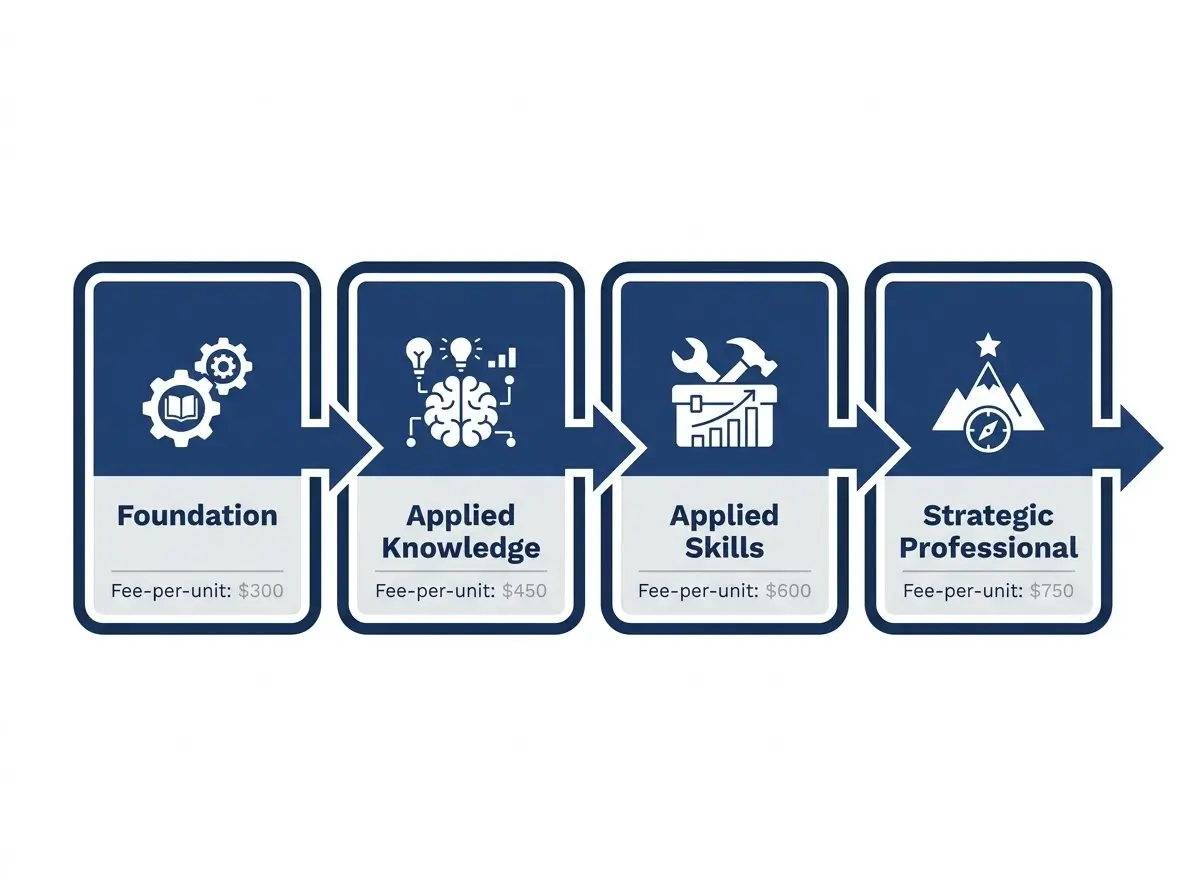
ACCA runs in four stages, and it helps to know this before you pick a college rather than after. Foundation level comes first if your grades don’t clear the direct-entry bar, followed by Applied Knowledge, Applied Skills, and finally Strategic Professional. Each stage has its own papers, Business and Technology and Management Accounting at Applied Knowledge, right through to Strategic Business Leader and Strategic Business Reporting at the top. Entry for Applied Knowledge in Kenya typically needs that KCSE mean grade of C+, with a C in both Mathematics and English specifically, though a relevant degree or CPA can also get you a direct route in.
Comparing ACCA Colleges in Kenya
This is where the research actually matters. Oshwal College in Parklands has been running ACCA tuition since 1992 and has a solid track record, but ask about fees on their site and you’ll be told to contact the admissions office directly, no published numbers, which makes it hard to compare against anyone else while you’re still shortlisting. Excel Global College publishes its ACCA fees per unit, Foundation at Ksh 19,500, Applied Knowledge at Ksh 22,500, Applied Skills at Ksh 25,500, and Strategic Professional at Ksh 27,500, which at least lets you budget properly before you commit to a full stage. As a Gold Approved Learning Provider, the college also runs physical classes, online classes, and distance learning, so the format doesn’t force your hand the way some colleges do.
Why an ICDL Course in Nairobi Fits Alongside ACCA
Nobody tells beginners this part, but the ACCA syllabus assumes a level of Excel and general computer competence that not everyone actually has coming out of secondary school. An ICDL course in Nairobi covers spreadsheets, word processing, databases, and online essentials in a structured way, rather than you picking it up badly while also trying to learn management accounting. It’s not compulsory, but if your last real computer class was in Form Two, doing it alongside your Foundation papers rather than after them saves a lot of frustration later.
Computer Packages in Nairobi Worth Sorting Out Early
If a full ICDL programme feels like more than you need right now, computer packages in Nairobi, the shorter Basic and Advanced Computer Skills courses, cover the same practical ground in less time. Word, Excel, PowerPoint, and email handling, essentially, are taught as a standalone short course rather than folded into a longer certification. For someone just starting at the foundation level and juggling a job, that’s often the more realistic first step.
Before You Enrol
Ask any shortlisted college three things: what each unit costs, how long the stage genuinely takes (three to six months is standard, not the fastest option some brochures promise), and whether classes align with ACCA’s own exam sessions in March, June, September, and December. Cross-check anything a college tells you against ACCA’s official global site, it’s the actual awarding body, and its entry requirements and syllabus pages don’t change depending on who’s trying to enrol you.
Still weighing up your options?
If you’re still weighing up ACCA courses in Nairobi against each other, the fastest way through it is a straight conversation with the admissions team and a request for the fee structure in writing. A college that hands that over without hesitation is usually the one worth shortlisting first.
Apply Now Contact Us